
Evaporation
Evaporation Gauges and Evapotranspiration Sensors for Meteorological and Agricultural Measurement
Evaporation is one of the key processes in the water cycle and in the surface energy balance. Accurate measurement helps determine how much water moves from water surfaces, soil and vegetation into the atmosphere, and how weather conditions affect water availability in a given area.
Evaporation gauges and evapotranspiration sensors are used in meteorological stations, agricultural research, irrigation management, hydrology, climate research, reservoir management, soil and vegetation studies, and environmental monitoring systems.
With the right instrumentation, it is possible to measure changes in the water level of an evaporation pan, track the rate of water loss over time, or directly measure the movement of water vapor from soil and vegetation into the atmosphere.
Meteo-Tech supplies evaporation gauges and evapotranspiration sensors for a wide range of applications, from traditional meteorological measurement with an evaporation pan to direct, advanced measurement of evapotranspiration in agricultural fields and ecosystems.
What Is Evaporation?
Evaporation is the process by which liquid water turns into water vapor and passes into the atmosphere. It occurs from the surfaces of seas, lakes, reservoirs, streams, wet soil, evaporation pans and other surfaces that hold water.
The rate of evaporation is influenced by several key factors:
- Air temperature
- Water temperature
- Solar radiation
- Wind speed
- Air humidity
- Atmospheric pressure
- Water surface area
- Water availability
- Atmospheric stability
- Surface type and its surroundings
When the temperature is high, radiation is strong, the wind is active and relative humidity is low, the evaporation rate is generally expected to rise. When the air is humid, the wind is weak or solar radiation is low, the process may be slower.
What Is Evapotranspiration?
Evapotranspiration (ET) is the combination of two processes:
- Evaporation of water from the soil and wet surfaces
- Transpiration of water from vegetation through the leaves
Transpiration occurs when water taken up by plant roots is transported through the plant's vascular system and released into the atmosphere as water vapor through the stomata in the leaves.
Evapotranspiration therefore represents the total water loss from the soil–vegetation system to the atmosphere.
This measurement is especially important in agriculture, because it helps estimate how much water a field has lost and how much needs to be replenished through irrigation. It is also used in drought research, water balance studies, crop response to weather conditions, watershed management and ecological research.
What Is the Difference Between Evaporation and Evapotranspiration?
Evaporation refers to the transfer of water from a liquid surface or wet soil into the atmosphere. Evapotranspiration also includes the water released by vegetation.
For example:
- A water pan loses water through evaporation.
- An agricultural field loses water through evaporation from the soil and transpiration from the plants.
- An open reservoir is affected mainly by evaporation.
- An orchard or greenhouse is affected by evapotranspiration.
The choice between an evaporation gauge and an evapotranspiration sensor depends on the purpose of the measurement and the environment being studied.
Meteorological Evaporation Gauge
A meteorological evaporation gauge is designed to measure the amount of water that evaporates from a water surface over a defined period of time.
One of the common methods is the use of an evaporation pan, placed in an open area and exposed to solar radiation, wind and local weather conditions. The change in the water level in the pan is used to estimate the amount of evaporation.
As the water level drops, the amount of evaporated water can be calculated, after accounting for precipitation, added water, overflow or other factors that affect the level.
An automatic evaporation gauge records the changes continuously and transfers the data to a data logger or a central monitoring system.
Class A Evaporation Pan
The Class A evaporation pan is a widely used instrument in meteorological and hydrological measurements. It is a round pan filled with water and installed under conditions intended to represent the effect of local weather on the evaporation rate.
The measurement is based on the change in the height of the water surface in the pan over time.
The measurement system may include:
- Evaporation pan
- Water level sensor
- Stilling well
- Rain gauge
- Data logger
- Temperature sensors
- Solar radiation sensor
- Anemometer
- Communication system
- Power supply or solar power system
To calculate evaporation accurately, it is important to distinguish between a level drop caused by evaporation and a change caused by precipitation, refilling, leakage or overflow.
How Is Evaporation Measured in a Pan?
At the start of the measurement period, the water level in the pan is established. After a set period of time, the level is measured again and the readings are compared.
When there has been no precipitation and no water has been added, the drop in water level approximately reflects the amount of evaporation.
In an automatic system, the sensor measures the water height at fixed intervals. The data is stored in the data logger and can be used to calculate:
- Hourly evaporation
- Daily evaporation
- Cumulative evaporation
- Rate of level change
- Minimum and maximum values
- Comparisons between days and seasons
- The relationship between evaporation and weather conditions
Automatic measurement reduces the need for manual readings and provides a continuous data series.
Electronic Evaporation Gauge Based on a Pressure Sensor
An electronic evaporation gauge can measure the water level using a sensitive pressure sensor. The sensor detects the pressure exerted on it by the water column and converts it into a value representing the water height in the pan.
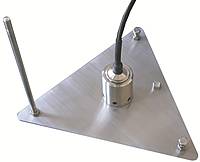
Model 15235, featured in this category, is an electronic water level gauge based on a pressure sensor and designed for installation in an evaporation pan. The sensor is integrated into a rugged housing and designed to measure changes in the water level continuously.
Potential advantages of this method include:
- Continuous measurement without manual readings
- Sensitivity to small changes in level
- Connection to a data logger
- Option for remote data transmission
- Fewer moving mechanical parts
- Suitability for automatic weather stations
- Integration with additional weather sensors
During installation, it is important to level the sensor, position it according to the manufacturer's instructions and make sure the measurement point is not affected by local waves or sudden movements of the water.
Analog Evaporation Gauge 255-100
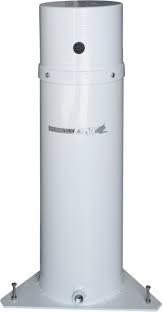
Model 255-100 is designed to measure the evaporation rate by tracking the change in water level in an evaporation pan. The instrument produces a resistance output that can be read by a suitable data logger.
The system is suitable for integration with a standard evaporation pan and for automatic measurement at meteorological stations, research stations and hydrological systems.
The advantages of using an evaporation gauge connected to a data logger include:
- Automatic storage of measurements
- Calculation by time interval
- Integration with rainfall data
- Integration with temperature, wind, humidity and radiation
- Data transfer to monitoring software
- Generation of graphs and reports
- Detection of abnormal level changes
The pan itself is usually purchased separately, and compatibility between the gauge, the pan, the data logger and the required measurement range should be verified.
Evapotranspiration Sensor LI-710
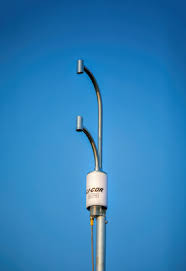
The LI-COR LI-710 sensor is designed to measure actual evapotranspiration, that is, the movement of water vapor from the field into the atmosphere. The sensor enables direct measurement in the field, without relying solely on calculated crop coefficients.
The system is suitable for relatively uniform, flat terrain and for field-scale or ecosystem-scale applications.
The LI-710 uses fast measurements of vertical wind speed and water vapor concentration to calculate actual evapotranspiration. According to the manufacturer, the system measures at 10 Hz and provides processed results at 30-minute intervals.
The sensor can connect to systems that support the SDI-12 protocol, including compatible data loggers.
The Advantages of Measuring Actual Evapotranspiration
In many irrigation systems, water consumption is commonly calculated from weather data, reference evapotranspiration and crop coefficients. This method is useful, but it may not accurately reflect the actual state of the field at all times.
Direct measurement of evapotranspiration can provide information on the actual water loss from the soil and vegetation.
This information can help with:
- Irrigation scheduling
- Determining water quantities
- Detecting water stress
- Water management during droughts
- Comparing irrigation methods
- Evaluating irrigation efficiency
- Assessing crop response
- Calculating the water balance
- Validating remote sensing data
- Hydrological and ecological research
Evaporation and Evapotranspiration in Agriculture
Agriculture is one of the main fields in which evaporation measurement has high practical value.
When it is known how much water a field has lost, more accurate irrigation decisions can be made, reducing both over-irrigation and under-irrigation.
Over-irrigation can lead to:
- Wasted water
- Fertilizer leaching
- Higher pumping costs
- Excessive soil saturation
- Reduced root aeration
- Disease development
- Deep percolation of water
Under-irrigation can lead to:
- Water stress
- Reduced growth
- Lower yields
- Reduced produce quality
- Increased sensitivity to heat
- Long-term damage to plants
Combining evapotranspiration data with soil moisture sensors, a weather station and an irrigation system makes it possible to build a more precise water management setup.
Evaporation Measurement for Reservoir Management
In open reservoirs, ponds, water treatment facilities and irrigation reservoirs, evaporation can cause significant water loss.
Measuring the evaporation rate helps with:
- Calculating the water balance
- Estimating water loss from the reservoir
- Planning filling and pumping
- Managing water inventory
- Comparing seasons
- Planning cover systems
- Examining the impact of climate change
- Testing the effectiveness of evaporation reduction measures
When the measurement is combined with level, flow and precipitation data, water loss caused by evaporation can be better separated from changes caused by pumping, infiltration into the soil or operational use.
Evaporation in Hydrology and Climate Research
Evaporation is an important component of the hydrological cycle. It affects the water balance of basins, rivers, reservoirs, soils and vegetation.
The data is used for:
- Building hydrological models
- Calculating regional water balance
- Drought research
- Watershed management
- Assessing water availability
- Agricultural forecasting
- Climate change research
- Comparing climate zones
- Monitoring multi-year trends
- Soil, vegetation and atmosphere research
A long, consistent series of measurements can help identify seasonal and annual trends and assess the impact of changes in temperature, radiation and wind.
Integrating an Evaporation Gauge with a Weather Station
An evaporation gauge provides an important data point, but its professional value increases when it is combined with additional meteorological measurements.
It is recommended to consider integration with:
- Air temperature sensor
- Relative humidity sensor
- Solar radiation sensor
- Wind speed and direction sensor
- Rain gauge
- Barometric pressure sensor
- Water temperature sensor
- Soil moisture sensors
- Data logger
- Communication system
This integration makes it possible to examine why the evaporation rate has changed and to understand the relationship between water loss and weather conditions.
For example:
- Strong solar radiation may increase the evaporation rate.
- Strong wind removes humid air from above the water surface and promotes evaporation.
- High relative humidity may slow the process down.
- Rainfall raises the water level in the pan and must be taken into account in the calculation.
- High water temperature can increase the energy available for evaporation.
How to Choose an Evaporation Gauge?
Measurement Purpose
Decide whether you need to measure evaporation from a water surface, calculate agricultural evapotranspiration, or directly measure the flux of water vapor from the field.
For evaporation pan measurement, a level sensor is suitable. For direct measurement in the field, an evapotranspiration sensor should be considered.
Measurement Method
You can choose between:
- Manual level measurement
- Pressure sensor
- Float mechanism
- Resistance output
- Direct measurement of water vapor and wind
- Calculation based on weather data
Each method has different advantages, limitations and costs.
Accuracy Level
The measurement resolution should match the expected rate of change. When only daily measurement is required, the requirements may differ from those of a research system that records short-term changes throughout the day.
Automation
For a permanent or remote system, it is recommended to choose a sensor that can be connected to a data logger and a communication system.
This makes it possible to:
- Store measurements continuously
- Receive data remotely
- Generate reports
- Combine the data with additional sensors
- Detect faults
- Receive alerts on abnormal levels
Installation Conditions
Check whether the instrument is designed for prolonged exposure to heat, sun, rain, dust, high humidity and field conditions.
Maintenance
An evaporation pan requires periodic inspection, cleaning, maintaining a proper water level and checking for leaks or interference with the measurement.
Advanced evapotranspiration sensors may require inspection of filters, pump components, communication and sensor operation in accordance with the manufacturer's instructions.
Correct Installation of an Evaporation Pan
The location of the pan has a major effect on data quality.
It is recommended to place it:
- In an open area
- In a location exposed to the sun
- Away from tall buildings
- Away from trees and sources of shade
- In an area representative of the surrounding conditions
- On a stable, level surface
- In a location that allows for maintenance
- Away from artificial water sources or sprays
Avoid placing it near walls, large asphalt surfaces, irrigation systems or objects that may alter the wind flow and the radiation balance.
Factors That Can Disrupt the Measurement
The level measurement in a pan is not affected by evaporation alone. Several other factors can change the water height:
- Rainfall
- Manual addition of water
- Leakage
- Overflow
- Wind-driven splashing
- Animals entering the pan
- Accumulation of dirt
- Algae growth
- Mechanical movement of the water
- Tilting of the pan
- Sensor malfunction
- Change in sensor position
It is therefore important to perform quality control on the data and to combine it with rainfall measurements and maintenance records.
Does an Evaporation Gauge Measure Crop Water Use?
A pan evaporation gauge does not directly measure the water use of a specific crop. It measures the water loss from the pan surface.
The data can be used as a basis for estimating water use with appropriate coefficients, but the crop type, growth stage, soil conditions and irrigation method must be taken into account.
A direct evapotranspiration sensor, by contrast, is designed to measure the transfer of water vapor from the field and vegetation into the atmosphere.
Is Evaporation the Same in Every Region?
No. The evaporation rate varies with the local climate, elevation, wind, radiation, temperature, humidity and surroundings.
Even two stations located relatively close to each other can show different evaporation rates if one is in a wind-exposed area and the other in a sheltered one.
Can Evaporation Be Measured in Real Time?
Yes. A level sensor connected to a data logger can take measurements at a fixed frequency and transmit the data in real time or near real time.
Advanced evapotranspiration sensors can also provide processed results during operation, depending on the configuration of the instrument and the system.
Can an Evaporation Gauge Be Connected to an Existing System?
In many cases, yes. Check the output signal type, power requirements and compatibility with the data logger.
The connection may be made via:
- Analog input
- Resistance measurement
- Voltage output
- Current output
- SDI-12
- Another communication interface
Model 255-100 produces a resistance output that can be monitored by suitable data loggers, while the LI-710 supports SDI-12 communication.
Meteo-Tech Evaporation Measurement Solutions
Meteo-Tech supplies evaporation and evapotranspiration measurement solutions for meteorological stations, agriculture, irrigation, hydrology, water resource management, academic research and environmental monitoring.
This category includes:
- Electronic evaporation gauge model 15235, based on a pressure sensor and designed for installation in an evaporation pan
- LI-710 evapotranspiration sensor for measuring the movement of water vapor from the field into the atmosphere
- Evaporation gauge 255-100 for measuring changes in the water level in an evaporation pan
The measurement system should be selected according to the project's goals, measurement method, required accuracy, site conditions, data logger type, communication requirements and the need for integration with additional meteorological sensors.
Meteo-Tech provides professional consulting on selecting an evaporation gauge or evapotranspiration sensor, measurement system design, integration with an evaporation pan and weather station, data logger connection, installation, training, maintenance and professional support according to the application requirements.