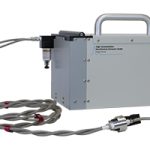
Particle Counter
-
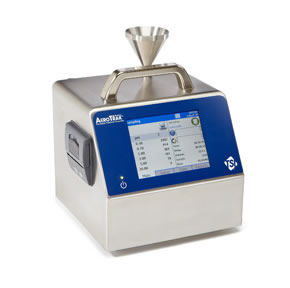
AeroTrak Handheld Particle Counter
SKU: AeroTrak Handheld Particle Counter -
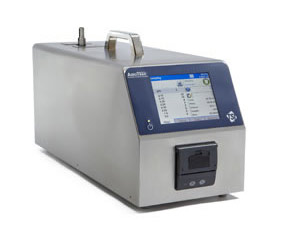
AeroTrak Handheld Particle Counter 9110
SKU: 9110 -
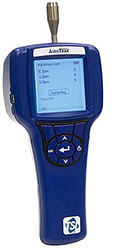
AeroTrak Handheld Particle Counter 9303
SKU: 9303 -
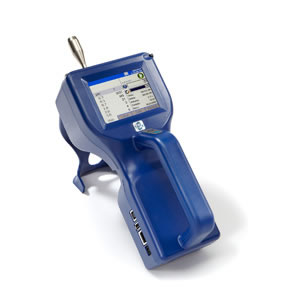
AeroTrak Handheld Particle Counter 9306
SKU: 9306 -
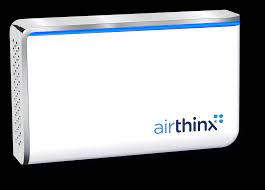
Indoor Air Quality Monitoring – airthinx IAQ
SKU: airthinx IAQ -
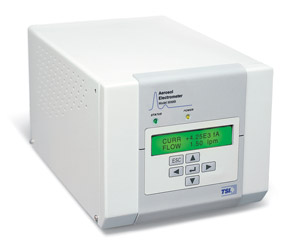
Particle Counters 3068B
SKU: AEROSOL ELECTROMETER 3068B -
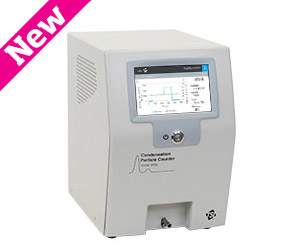
Particle Counters 3750/3752/3756
SKU: CONDENSATION PARTICLE COUNTER 3750/3752/3756 -
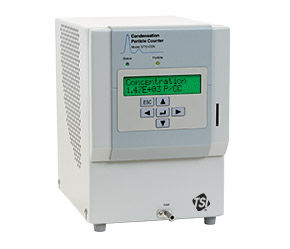
Particle Counters 3772CEN – 3772-CEN
SKU: CONDENSATION PARTICLE COUNTER 3772-CEN -
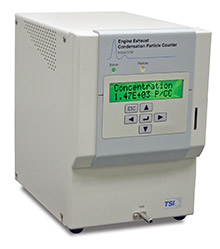
Particle Counters 3790A EECPC
SKU: ENGINE EXHAUST CONDENSATION PARTICLE COUNTER 3790A -
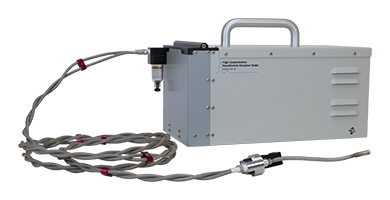
Particle Counters 3795-HC
SKU: 3795-HC -
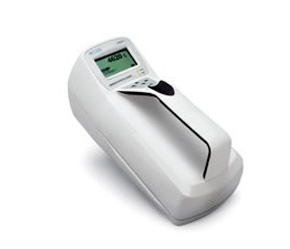
Particle Counters CPC3007
SKU: CONDENSATION PARTICLE COUNTER 3007 -
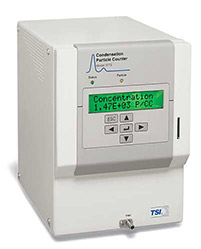
Particle Counters CPC3772
SKU: CONDENSATION PARTICLE COUNTER 3772 -
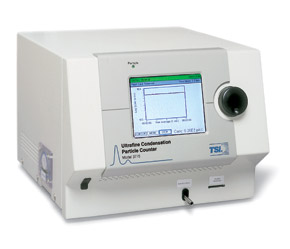
Particle Counters CPC3775
SKU: CONDENSATION PARTICLE COUNTER 3775 -
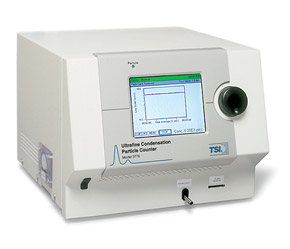
Particle Counters CPC3776
SKU: ULTRAFINE CONDENSATION PARTICLE COUNTER 3776 -
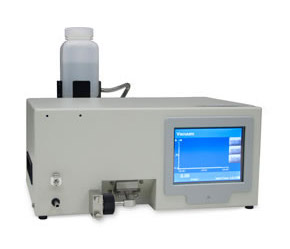
Particle Counters CPC3783
SKU: ENVIRONMENTAL PARTICLE COUNTER 3783 -
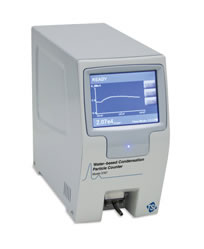
Particle Counters CPC3787 – GENERAL PURPOSE WATER-BASED CONDENSATION PARTICLE COUNTER 3787 REQUEST A QUOTE ACCESSORIES
SKU: GENERAL PURPOSE WATER-BASED CONDENSATION PARTICLE COUNTER 3787 REQUEST A QUOTE ACCESSORIES -
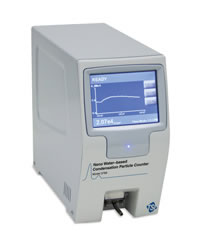
Particle Counters CPC3788 – NANO WATER-BASED CONDENSATION PARTICLE COUNTER 3788
SKU: NANO WATER-BASED CONDENSATION PARTICLE COUNTER 3788 -
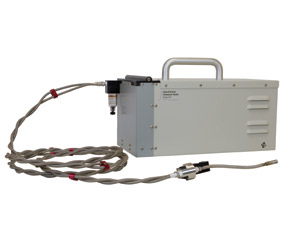
Particle Counters CPC3795 – NANOPARTICLE EMISSION TESTER MODEL 3795
SKU: NANOPARTICLE EMISSION TESTER MODEL 3795 -
TSI PARTICLE TECHNOLOGY
SKU: TSI PARTICLE TECHNOLOGY -
TSI PARTICLE TECHNOLOGY
SKU: TSI PARTICLE TECHNOLOGY
Airborne Particle Counters
An airborne particle counter is an advanced measuring instrument used to detect, count and characterize particles suspended in the air. These systems are designed to measure aerosols and fine particles across a wide range of applications, including environmental research, air quality, atmospheric research, industry, cleanrooms, occupational health, nanoparticle research and process control.
The Airborne Particle Counters category features a range of professional systems for measuring particle number concentration, including condensation-based CPC and CNC particle counters, which are suited to measuring very small particles that cannot be detected directly with conventional optical methods.
The instruments in this category are suitable for research laboratories, universities, research institutes, industrial companies, environmental monitoring agencies, calibration laboratories, equipment manufacturers and quality control systems.
What Is an Airborne Particle Counter?
An airborne particle counter measures the number of particles present in a defined volume of air. Unlike instruments that measure mass concentration only, a particle counter provides information on Particle Number Concentration, that is, the number of particles per unit volume.
This measurement is especially important when dealing with very fine particles, because a large number of small particles may have a low total mass yet still be significant from an environmental, industrial or research standpoint.
CPC Particle Counters
One of the key technologies in the field is the Condensation Particle Counter, or CPC for short.
CPCs are designed to measure very fine particles. The operating principle is based on growing the particles through a condensation process. The small particles act as condensation nuclei, grow to a size that can be detected optically, and are then counted by a sensing system.
This method makes it possible to measure particles far smaller than those that can be counted directly with a conventional optical particle counter.
Models in this category include:
- CPC3007
- CPC3772
- CPC3775
- CPC3783
- CPC3787
- CPC3788
- EEPS/CPC and additional systems for particle and aerosol measurement
The various models are tailored to different size ranges, particle concentrations, flow rates and applications.
Measuring Airborne Nanoparticles
One of the most important applications of CPC particle counters is the measurement of nanoparticles and ultrafine particles.
Nanometer-sized particles can be generated by many processes, such as combustion, engines, industrial processes, welding, materials research, nanomaterial manufacturing and chemical processes.
Because these particles are so small, standard measuring instruments are not always able to detect them directly. CPC systems make it possible to count them after they have been grown by condensation.
The ability to measure the number concentration of nanoparticles is particularly important in aerosol research, atmospheric science, emissions studies, industry, and health and environmental research.
Measuring Airborne Particle Concentration
A particle counter provides one key figure: the number of particles per unit volume.
The measurement can be used for:
- Real-time monitoring of particle levels
- Identifying emission sources
- Comparing different areas
- Monitoring industrial processes
- Evaluating the efficiency of filtration systems
- Nanoparticle research
- Tracking changes over time
- Environmental and atmospheric research
- Quality control in manufacturing processes
- Aerosol research
When a particle counter is combined with additional particle sizing systems, it is possible to obtain more in-depth information on the size distribution and composition of the airborne particle population.
What Is the Difference Between a Particle Counter and a Particle Monitor?
The terms are sometimes used interchangeably, but in practice they can refer to different instruments.
A particle counter generally focuses on counting the number of particles present in the air.
A particle monitor or Aerosol Monitor may measure mass concentration, such as PM1, PM2.5 and PM10.
A Particle Size Analyzer is designed to measure particle size distribution.
It is therefore important to define in advance what you want to measure: particle number, mass, size, size distribution or a combination of these parameters.
Optical Particle Counters vs. CPC Particle Counters
An optical particle counter detects particles by light scattering. When a particle passes through the measurement zone, it scatters light, and the system detects and classifies it.
A CPC, by contrast, is designed to handle very small particles as well. The instrument first grows the particles by condensation and then counts them using an optical system.
This makes CPC systems especially suitable for research that requires measuring ultrafine particles and nanoparticles.
Applications of Airborne Particle Counters
Particle counters are used across a wide range of fields.
Aerosol Research
Aerosol research requires measuring how particles form, evolve and disperse in the air. CPCs are a key tool in these studies, particularly when dealing with particles in the nanometer range.
Atmospheric Research
Atmospheric particles affect environmental and climate processes. Measuring particle number concentration enables researchers to track new particle formation, air pollution and emission sources.
Industry
In industrial processes, particle counters can be used for emissions monitoring, quality control, filtration system testing and tracking particles generated during the process.
Occupational Health
In certain work environments, fine particles may be generated by welding, cutting, grinding, burning or working with nanoscale materials.
A particle counter makes it possible to detect changes in particle levels and compare different working conditions.
Filtration System Testing
A particle counter can be used to measure particle concentration upstream and downstream of a filter. Comparing the data makes it possible to evaluate the performance of the filtration system.
Vehicle and Engine Emissions Research
CPC systems are also widely used in engine, combustion and emissions research. They make it possible to measure the number of particles generated in the process and to compare fuel types, engine technologies and emission reduction systems.
Portable Particle Counters
Some applications require measurements to be taken in the field, not only in the laboratory.
A portable particle counter enables:
- Environmental measurements
- Monitoring in factories
- Testing at work sites
- Comparisons between areas
- Locating emission sources
- Short-term measurements
- Field studies
A model such as the CPC3007 is designed for portable applications and enables particle concentration measurements in locations that call for a compact, easily transportable solution.
How to Choose an Airborne Particle Counter
Choosing the right instrument depends on several key parameters.
First, define the minimum particle size you want to measure. If you are dealing with nanoparticles or ultrafine particles, a CPC may be required.
You should also check the expected concentration range. Some applications involve very low particle concentrations, while others involve significantly higher concentrations.
Additional parameters to consider include:
- Particle size range
- Particle concentration range
- Sampling rate
- Response time
- Portability
- Data logging capability
- Computer connectivity options
- Environmental conditions
- Working fluid type or condensation technology
- Compatibility with an existing measurement system
- Calibration and maintenance requirements
How Do Different CPC Particle Counter Models Differ?
Not all CPCs are designed for the same application.
Different models can vary in the minimum detectable particle size, concentration range, flow rate, response speed and options for connecting to other systems.
For example, a system intended for advanced laboratory research may require especially high sensitivity, whereas field testing may favor a compact, portable instrument.
The model should therefore be selected according to the purpose of the measurement, not just the general measurement range.
Professional Solutions for Airborne Particle Counting
Meteo-Tech offers a range of professional solutions for particle measurement, airborne particle counting, nanoparticles and aerosols, including CPC systems and advanced particle counters.
The instruments are suited to applications in aerosol research, air quality, environmental science, industry, emissions monitoring, occupational health and atmospheric research.
Choosing the right system makes it possible to measure particle concentration more accurately, detect changes in real time, compare different conditions and obtain reliable data for research, development and quality control.