
Fluid Mechanics
-
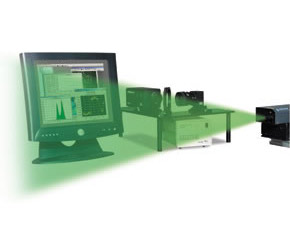
Fluid Mechanics PLIF SYSTEM – PLIF SYSTEM CONCENTRATION AND VELOCITY MEASUREMENT
SKU: PLIF SYSTEM CONCENTRATION AND VELOCITY MEASUREMENT -
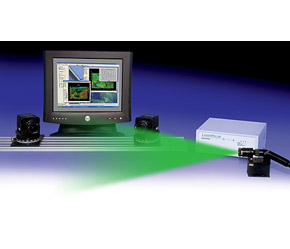
Fluid Mechanics STEREO PIV SYSTEM
SKU: STEREO PIV SYSTEM -
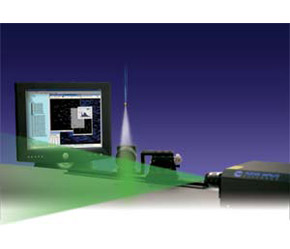
Fluid Mechanics System 2D – PIV SYSTEM 2D MEASUREMENT
SKU: PIV SYSTEM 2D MEASUREMENT -
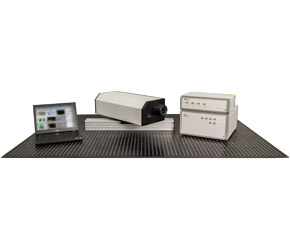
Fluid Mechanics System LDV SYSTEM – POWERSIGHT SOLID STATE LASER-BASED LDV SYSTEM 2-COMPONENT
SKU: POWERSIGHT SOLID STATE LASER-BASED LDV SYSTEM 2-COMPONENT -
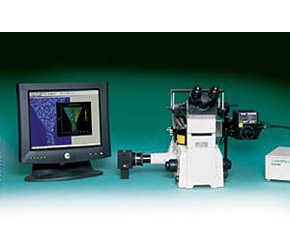
Fluid Mechanics System MICROPIV – PIV SYSTEM MICROPIV
SKU: PIV SYSTEM MICROPIV -
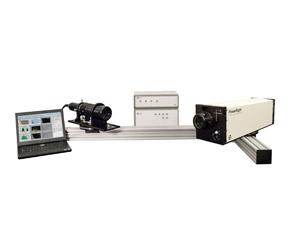
Fluid Mechanics System PDPA SYSTEM – POWERSIGHT SOLID STATE LASER-BASED PDPA SYSTEM
SKU: POWERSIGHT SOLID STATE LASER-BASED PDPA SYSTEM -
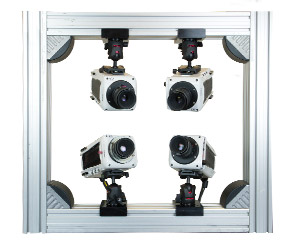
Fluid Mechanics V3V – V3V-FLEX VOLUMETRIC PIV SYSTEMS
SKU: V3V-FLEX VOLUMETRIC PIV SYSTEMS -
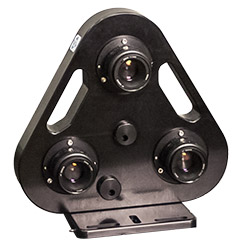
Fluid MechanicsV3V™ SYSTEM – V3V™ SYSTEM 9000 SERIES: VOLUMETRIC 3-COMPONENT VELOCIMETRY
SKU: V3V™ SYSTEM 9000 SERIES: VOLUMETRIC 3-COMPONENT VELOCIMETRY
Systems for measuring particle flow in liquids or air are designed for the precise characterization of particle motion within fluids, including velocity, direction, size, dispersion and dynamic behavior. These systems are used in research and development, fluid engineering, aerodynamics, spray and droplet research, industrial processes, combustion, environmental science, bioengineering and the study of two-phase and multiphase flows.
In the Particle Flow in Liquid/Air category you will find advanced systems based on optical and laser technologies, including PIV, MicroPIV, LDV and PDPA. Each of these technologies provides different information about the flow and the particles moving within it, so choosing the right system depends on the type of fluid, the particle size, their velocity, the measurement range and the parameters you want to analyze.
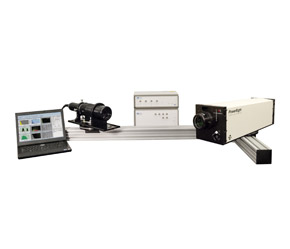
What Is Particle Flow Measurement?
Particle flow measurement describes how particles, droplets or bubbles move within a gas or liquid. Rather than measuring only the overall flow rate, advanced systems make it possible to examine the local behavior of the flow at different points or regions.
Depending on the technology, parameters such as the following can be measured:
- Particle velocity
- Flow direction
- Two-dimensional velocity field
- Velocity field in micro-systems
- Droplet and particle size
- Size distribution
- Particle concentration
- Velocity fluctuations
- Turbulence characteristics
- Behavior of two-phase flows
The ability to measure these parameters without direct contact with the flow is especially important when accurate measurement is required without disturbing the process under test.
PIV Systems for Flow Field Measurement
PIV, or Particle Image Velocimetry, is an optical method for measuring the velocity field of a flow.
In this method, small tracer particles are added to the fluid. A laser system illuminates the particles, and a camera captures them at two or more instants. By analyzing the change in particle position, the flow velocity in the measurement region can be calculated.
One of the key advantages of PIV is the ability to obtain a complete velocity field rather than a measurement at a single point.
PIV systems are suitable for research in fields such as:
- Aerodynamics
- Hydrodynamics
- Wind tunnels
- Water channels
- Flows around bodies
- Cooling systems
- Combustion
- Turbulence
- Environmental research
- Industrial flows
2D PIV System
A 2D PIV system is designed to measure two velocity components within a measurement plane.
Using laser illumination and a high-speed camera, the movement of the tracer particles can be followed to create a map of flow velocities.
This type of system is particularly suitable when you want to see how the flow changes across a given region and to identify phenomena such as vortices, separation zones, recirculating flow and local changes in velocity.
MicroPIV for Flow Measurement in Micro-Systems
MicroPIV is a version of PIV technology adapted for measurements on a microscopic scale.
The system is designed to measure flows inside microchannels, MEMS devices, Microfluidics and systems in which the flow dimensions are very small.
Common applications include:
- Microfluidics
- Lab-on-a-Chip
- MEMS
- Bioengineering
- Medical systems
- Research on cells and biological fluids
- Micro-mixing
- Flow research in tiny channels
MicroPIV makes it possible to study velocity fields in regions where measurement with conventional flow sensors is difficult or impossible.
LDV for Measuring Particle Velocity and Flow
LDV, or Laser Doppler Velocimetry, is an optical measurement method based on the Doppler effect of laser light scattered by particles moving with the flow.
The system typically measures particle velocity at a defined measurement point and provides velocity data with high temporal resolution.
One of the key advantages of LDV is that the measurement does not require inserting a physical sensor into the flow.
An LDV system is particularly suitable for measuring:
- Flow velocity
- Velocity fluctuations
- Turbulence
- Velocity profiles
- High-speed flows
- Unsteady processes
- Flows in gases and liquids
2-Component LDV System
A 2-Component LDV system makes it possible to measure two velocity components at the same measurement point.
This provides more detailed information about the direction and motion of the flow and allows the study of systems in which the flow has components in several directions.
Such systems are used in advanced research on flow, turbulence, aerodynamics, hydrodynamics and industrial processes.
PDPA for Measuring the Size and Velocity of Particles and Droplets
PDPA, or Phase Doppler Particle Analyzer, is an advanced laser system that simultaneously measures the size of a particle or droplet and its velocity.
This technology is especially suited to research on sprays, droplets, atomization and two-phase flows.
Each time a particle or droplet passes through the measurement volume, the system analyzes the scattered light and derives information about its characteristics.
Applications of PDPA Systems
PDPA systems are suitable for applications such as:
- Spray characterization
- Spray coating systems
- Fuel injection
- Combustion
- Engines
- Atomization processes
- Cooling towers
- Spraying systems
- The pharmaceutical industry
- Droplet research
- Multiphase flows
The ability to measure both size and velocity provides a detailed picture of the behavior of droplets and particles within the flow.
What Is the Difference Between PIV, LDV and PDPA?
Although all of these methods are used to measure flow and particles, they provide different information.
PIV is suited to obtaining a velocity field over an entire area.
LDV is suited to accurate velocity measurement at a specific point with high temporal resolution.
PDPA is suited to measuring both the velocity and the size of particles or droplets.
MicroPIV uses the same principle as PIV, but on a microscopic scale.
The choice of system therefore depends on whether you need to measure a flow field, point velocity, particle size or a combination of several parameters.
Measuring Particle Flow in Air
For air measurements, optical systems can be used to study the motion of particles, droplets or aerosols within a gas stream.
Applications include:
- Wind tunnels
- Ventilation and air conditioning
- Emissions
- Sprays
- Combustion
- Flows around vehicles
- Aerodynamics
- Particle dispersion
- Filtration systems
- Environmental research
Non-contact measurement makes it possible to analyze the flow without adding sensors that could alter the flow conditions.
Measuring Particle Flow in Liquids
In liquid systems, measurements can be performed inside channels, pipes, tanks, mixing systems, pumps and hydrodynamic research setups.
Common applications include:
- Pipe flow
- Liquid mixing
- Turbines
- Pumps
- Water channels
- Cooling systems
- Hydrodynamic research
- Microfluidics
- Biological flows
- Industrial process systems
Two-Phase and Multiphase Flows
Particle flow measurement systems are especially important in research on Multiphase Flow, in which two or more phases are present, for example gas and liquid droplets, liquid and bubbles, or liquid and solid particles.
In such systems it is possible to study:
- The velocity of each phase
- Droplet or particle size
- Particle dispersion
- Interaction between the particles and the fluid
- Accumulation zones
- Turbulence
- Mixing and separation processes
This research is relevant to many industries, including energy, chemicals, aviation, automotive, pharmaceuticals and food.
How to Choose a Particle Flow Measurement System?
Choosing the right system depends on the research objective and the parameters you want to measure.
It is important to consider:
- Type of fluid: gas or liquid
- Size of the particles or droplets
- Velocity range
- Size of the measurement region
- Whether a velocity field or a point measurement is required
- Number of velocity components
- Temporal resolution
- Spatial resolution
- Whether particle size must also be measured
- Optical transparency of the measurement region
- Temperature and pressure conditions
- Compatibility with the experimental setup
For example, PIV can be chosen for measuring a flow field in a wind tunnel, LDV for accurate point measurement, and PDPA for characterizing droplets in a spray.
Professional Solutions for Measuring Particle Flow in Liquids and Air
Meteo-Tech offers advanced systems for measuring particle flow in liquids and air, including PIV, MicroPIV, LDV and PDPA solutions for advanced flow research and characterization.
The systems are suitable for academic research, industry, fluid engineering, aerodynamics, hydrodynamics, spray research, combustion, Microfluidics and multiphase flows, and provide accurate information on the velocity, direction, size and behavior of particles and fluid under a variety of measurement conditions.