
Barometric Pressure
Barometric pressure is one of the key variables measured in meteorology, atmospheric research and environmental monitoring systems. Changes in air pressure provide important information about the development of weather systems, the passage of fronts, approaching lows and highs, changes in altitude and local atmospheric conditions.
Barometric pressure meters, also known as barometers or atmospheric pressure sensors, measure the force exerted by the column of air per unit area. Measurement can be carried out locally with a digital barometer, or as part of an automatic weather station connected to a data logger and a communication system.
Meteo-Tech supplies a range of barometric pressure sensors and meters suitable for weather stations, meteorological research, hydrology, aviation, agriculture, environmental monitoring, calibration laboratories and professional measurement systems. The range of models makes it possible to match the measurement range, accuracy level, output signal, installation conditions and connection method to the requirements of the project.
What Is Barometric Pressure?
Barometric pressure is the pressure that the atmosphere exerts on the Earth's surface. It originates from the weight of the air above the measurement point and from the forces acting within the atmosphere.
Although air may seem weightless, it is made up of molecules that have mass. Gravity pulls these air molecules downward, creating pressure on the ground, on buildings, on bodies of water and on measuring instruments.
Atmospheric pressure varies according to a number of factors:
- Altitude above sea level
- Air temperature
- Air density
- Humidity
- Movement of weather systems
- Geographic location
- Seasonal changes
- Local conditions
- Passage of barometric lows and highs
Accurate, continuous pressure measurement makes it possible to track these changes and incorporate them into broader meteorological analysis.
What Is a Barometer?
A barometer is an instrument designed to measure atmospheric pressure. In the past, barometers based on a mercury column or a mechanical mechanism were widely used. Today, most professional measurement systems use electronic sensors that convert pressure into an electrical or digital signal.
An electronic barometer can operate as a stand-alone instrument or as part of a system that includes:
- A weather station
- A data logger
- A control computer
- A communication system
- Monitoring software
- An alert system
- Temperature and humidity sensors
- An anemometer
- A rain gauge
- Solar radiation sensors
In an automatic system, the measurement interval can be configured, data can be stored over long periods and transmitted to a control center or a cloud system.
Why Measure Barometric Pressure?
Barometric pressure is a fundamental variable in weather analysis. Changes in it may indicate the movement and development of atmospheric systems.
In general, falling pressure may be associated with an approaching low-pressure system, while rising pressure may be associated with the establishment of a high-pressure system. However, the weather should not be inferred from pressure alone. The measurement needs to be combined with data on wind, temperature, humidity, cloud cover, precipitation and meteorological models.
Barometric pressure measurement is used for:
- Weather forecasting
- Detecting the passage of fronts
- Tracking lows and highs
- Correcting meteorological measurements
- Altitude calculation
- Atmospheric research
- Aviation
- Hydrology
- Environmental monitoring
- Calibration of measuring instruments
- Running numerical models
- Analysis of climate series
Units of Barometric Pressure Measurement
Barometric pressure can be expressed in several units, depending on the field of application and the measurement system.
Common units include:
- Hectopascal, hPa
- Millibar, mbar
- Pascal, Pa
- Kilopascal, kPa
- Millimeter of mercury, mmHg
- Inch of mercury, inHg
In meteorology, the hectopascal or the millibar is mainly used. Numerically, one hectopascal equals one millibar.
In aviation, hectopascals or inches of mercury are used, depending on the country, the equipment and the accepted procedures.
What Is the Difference Between Barometric Pressure and Atmospheric Pressure?
In most applications, the terms barometric pressure and atmospheric pressure describe the same variable: the pressure exerted by the atmosphere at the measurement point.
The term "barometric" usually refers to the method of measurement with a barometer, whereas "atmospheric" describes the physical phenomenon itself.
Both terms can be found on e-commerce sites, in technical specifications and in measurement systems:
- Barometric pressure meter
- Barometric pressure sensor
- Digital barometer
- Atmospheric pressure sensor
- Air pressure meter
- Barometric Pressure Sensor
- Digital Barometer
How Does a Barometric Pressure Sensor Work?
A barometric pressure sensor contains a sensitive element that changes in response to the pressure applied to it. The change may be measured using capacitive, resistive or piezoresistive principles, or other electronic technologies.
The measurement process typically includes:
- Air pressure is applied to the sensing element.
- The element changes an electrical property according to the pressure.
- The electronic circuit detects the change.
- The signal is amplified, filtered and corrected.
- A pressure value is obtained in the selected unit.
- The data is passed to a display, a data logger or a control system.
Advanced sensors may include temperature compensation, digital processing, self-tests and various communication options.
Types of Barometric Pressure Meters
Digital Barometer
A digital barometer shows air pressure on a display or transmits it as digital data to an external system.
Its advantages include:
- Clear reading
- High resolution
- Computer connectivity
- Integration with a data logger
- Storage of measurements
- Reduced reading errors
- Remote data transmission
- Integration with monitoring software
A digital barometer is suitable for weather stations, laboratories, hydrological systems and measurement setups that require stable, continuous readings.
Analog Barometric Pressure Sensor
An analog sensor converts pressure into a voltage, current or other electrical signal. The signal is read by a data logger, a controller or a data acquisition system.
Analog sensors are particularly suitable for existing systems that require integration with:
- Industrial controllers
- Data loggers
- SCADA systems
- Control systems
- Weather stations
- Calibration equipment
- Research systems
When selecting a sensor, make sure the output signal range matches the input of the measurement system.
Pressure Sensor with Digital Output
Digital sensors transmit the measured value via a communication protocol. They may offer better immunity to interference and make it easier to connect several sensors to a single system.
Check that the protocol is compatible with the data logger or controller in use.
Portable Barometer
A portable barometer is suitable for field checks, instrument comparisons, maintenance, calibration and checking conditions at multiple sites.
When choosing a portable instrument, it is important to check:
- Measurement range
- Accuracy
- Battery life
- Data storage capability
- Operating conditions
- Display readability
- Data export options
Absolute Pressure, Gauge Pressure and Barometric Pressure
Absolute Pressure
Absolute pressure is measured relative to a perfect vacuum. This is a fixed physical reference point at which the pressure equals zero.
Barometric pressure measurements are usually based on absolute pressure, since the goal is to measure the actual pressure exerted by the atmosphere.
Gauge Pressure
Relative pressure, also called Gauge Pressure, is measured relative to ambient pressure. When the measured pressure equals atmospheric pressure, the relative value may be zero.
This method is common in industrial systems, tanks, pumps, piping and processes where the difference between system pressure and ambient pressure is what matters.
Differential Pressure
Differential pressure is the difference between two pressure points. It is used for flow measurement, filter testing, cleanroom monitoring, ventilation systems and other applications.
It is important to distinguish between the measurement types and choose a sensor suited to the absolute, gauge or differential pressure required.
The Effect of Altitude on Air Pressure
As altitude increases, the amount of air above the measurement point decreases, and atmospheric pressure therefore drops.
For this reason, a station located at sea level will usually measure higher pressure than a station in a mountainous area, even when both are affected by the same weather system.
To compare stations located at different altitudes, it is common practice to reduce the pressure to sea level. The correction takes into account the station altitude and additional variables, depending on the method used.
Without such a correction, it would be difficult to tell whether the difference between stations is caused by the weather system or merely by differences in altitude.
Station Pressure and Sea-Level Corrected Pressure
Station Pressure
Station pressure is the pressure actually measured at the height at which the sensor is installed. It is the instrument's direct reading before correction to sea level.
Sea-Level Pressure
Sea-level corrected pressure is a calculated value that allows stations at different altitudes to be compared. This value is common on weather maps and in meteorological reports.
When pressure data is presented on a website, in a monitoring system or in a report, it is important to state whether it is station pressure or corrected pressure.
Barometric Pressure and Weather Forecasting
Changes in air pressure are related to the movement of air masses and to synoptic systems.
A low-pressure system may be associated with rising air, cloud development and unstable conditions. A high-pressure system may be associated with subsiding air and more stable conditions.
However, the relationship is not absolute. The actual weather also depends on:
- The amount of moisture in the atmosphere
- Wind direction and speed
- Temperature
- Atmospheric structure
- Topography
- The position of fronts
- The season
- The movement of the system
- Sea and land effects
Barometric pressure should therefore be analyzed as part of a full data set rather than as a single indicator.
The Importance of the Pressure Trend
In many cases, the trend of change is no less important than the value itself.
A monitoring system can calculate:
- Current pressure
- Change over the last hour
- Change over three hours
- Daily trend
- Minimum value
- Maximum value
- Rate of rise or fall
- Periodic average
A rapid drop in pressure may indicate a significant change in the atmospheric system. A sustained rise may indicate stabilization or the strengthening of a barometric high.
Trend analysis requires continuous measurement, an accurate clock and an instrument that remains stable over time.
Barometric Pressure Meters for Weather Stations
A pressure sensor is a basic component of a professional weather station. It is installed alongside temperature, humidity, wind, precipitation and radiation sensors.
In an automatic system, the data logger reads the sensor at a set interval and stores data such as:
- Instantaneous pressure
- Average pressure
- Minimum pressure
- Maximum pressure
- Pressure change
- Sea-level corrected pressure
- Periodic trends
The data can be transmitted to a control center via cellular communication, the internet, radio or a cloud system.
Aviation Applications
Atmospheric pressure is essential data in aviation. It is used to set altimeters and to calculate altitude relative to a reference point.
A change in the pressure setting may affect the altitude reading, so reliable, up-to-date measurement is required.
Pressure sensors are used in:
- Airport weather stations
- Automatic observation systems
- AWOS stations
- ASOS stations
- Aviation forecasting systems
- Test and calibration equipment
- Runway monitoring systems
- Control centers
In aviation applications, attention must be paid to standards requirements, accuracy, redundancy, calibration and system availability.
Hydrology Applications
Barometric pressure is also important in hydrological measurements. Pressure-based water level sensors may be affected by changes in atmospheric pressure.
In some systems, barometric pressure must be measured in order to apply compensation and isolate the pressure caused by the water column.
The measurement is used in:
- Wells
- Reservoirs
- Streams
- Groundwater
- Hydrological stations
- Level gauges
- Flood monitoring systems
- Water research
When an absolute pressure gauge is used to measure level, data from a nearby barometer can be used to correct the measurement.
Agriculture and Agrometeorology Applications
Barometric pressure is integrated into agrometeorological stations to provide a complete picture of weather conditions in the field.
The data may be used for:
- Analysis of weather conditions
- Agrometeorological calculations
- Soil and vegetation research
- Tracking rain systems
- Planning agricultural operations
- Greenhouse management
- Irrigation research
- Documenting seasonal conditions
In greenhouses and controlled-environment agriculture systems, barometric pressure can be combined with temperature, humidity, carbon dioxide, radiation and vapor pressure.
Atmospheric Research Applications
Atmospheric research requires accurate pressure measurement in order to analyze physical processes and calculate additional variables.
The data is used for:
- Weather research
- Climate research
- Sensor calibration
- Correction of gas measurements
- Air density calculation
- Altitude calculation
- Flux research
- Eddy Covariance systems
- Radiation research
- Model validation
In research systems, it is important to consider long-term stability, accuracy, resolution and calibration traceability.
Industrial and Laboratory Applications
Barometric pressure sensors are also used in non-meteorological processes.
Possible applications include:
- Compensation for changes in ambient pressure
- Product testing
- Equipment calibration
- Environmental chambers
- Test laboratories
- Electronics manufacturing
- Quality control
- Vacuum systems
- Absolute pressure measurements
- Room and facility monitoring
In these applications, it is important to define whether barometric, absolute or gauge pressure is required.
Accuracy, Resolution and Stability
Three key characteristics when selecting a pressure sensor are accuracy, resolution and stability.
Accuracy
Accuracy describes how close the measurement is to the true value. Check how the manufacturer defines it and whether it includes the effects of temperature, non-linearity and hysteresis.
Resolution
Resolution is the smallest change the system can display or detect. High resolution does not necessarily mean high accuracy.
Long-Term Stability
Stability describes the sensor's ability to maintain its performance over time. A sensor may be accurate at the time of calibration but drift gradually after months or years.
In research setups, aviation and reference stations, stability and periodic calibration are particularly important.
The Effect of Temperature on Pressure Measurement
Sensing elements and electronics can be affected by ambient temperature. Professional sensors include compensation mechanisms designed to reduce the effect of temperature on the measurement.
When selecting a sensor, check:
- Operating temperature range
- Level of compensation
- Accuracy at different temperatures
- Storage conditions
- Warm-up time
- Installation location
Do not rely on the accuracy stated at a single temperature point when the instrument is intended to operate in changing outdoor conditions.
Installing a Barometric Pressure Sensor
The location of the sensor affects measurement quality. It should be protected from conditions that may create local pressure that is not representative of the atmosphere.
It is recommended to take into account:
- Direct airflow
- Wind gusts
- Ventilation systems
- Doors and windows
- Heating and cooling
- Water ingress
- Dust
- Condensation
- Vibration
- Sharp temperature changes
- Installation height
- Enclosure sealing
The sensor is sometimes installed inside the station enclosure with a suitable vent that allows pressure equalization with the surroundings while protecting against water and dust.
How to Prevent Measurement Errors?
To improve data reliability, it is recommended to:
- Install the sensor according to the manufacturer's instructions
- Avoid exposure to artificial airflow
- Check that the pressure port is in good condition
- Prevent blockages and dirt
- Perform periodic calibration
- Compare against a reference instrument
- Record the station altitude
- Configure the measurement units correctly
- Distinguish between station pressure and corrected pressure
- Check the power and communication connections
- Perform data quality control
- Keep records of maintenance and calibration
Calibration of Barometric Pressure Meters
Calibration is a process in which the instrument is compared with a reference system of known traceability. Its purpose is to check the measurement deviation and assess whether the sensor meets the requirements of the application.
Calibration frequency depends on:
- Standards requirements
- Manufacturer's instructions
- The importance of the measurement
- Operating conditions
- Sensor stability
- Results of previous calibrations
- The organization's quality policy
In critical applications, it is recommended to establish an organized calibration program and keep certificates and results over time.
Connecting a Pressure Sensor to a Data Logger
Before connecting the sensor, check that its interface is compatible with the logger.
Details to check include:
- Supply voltage
- Current consumption
- Voltage signal
- Current signal
- Digital output
- Communication protocol
- Sampling rate
- Grounding
- Cable length
- Protection against interference
- Conversion formula to pressure units
After connection, configure the measurement range, display units, sampling interval and required calculations in the logger.
How to Choose a Barometric Pressure Meter?
Define the Purpose of the Measurement
Distinguish between a weather station, aviation, hydrology, a laboratory, industry or research. Each field may have different requirements.
Check the Pressure Range
An overly wide range may come at the expense of resolution or suitability for the application. Choose a range that covers the expected conditions and provides an appropriate safety margin.
Determine the Accuracy Level
A general-purpose station does not necessarily require the same level of accuracy as a reference station, a calibration laboratory or an aviation system.
Choose the Output Signal
Match the analog or digital output to the data logger, controller or computer.
Check the Environmental Conditions
Take into account temperature, humidity, dust, condensation, rain, salinity and vibration.
Consider Power Consumption
In a system powered by a battery or solar panel, low energy consumption is important.
Check Calibration and Maintenance Options
It is recommended to choose a product that can be calibrated, tested and maintained throughout the life of the system.
Consider Long-Term Stability
In permanent systems, stability can be no less important than initial accuracy.
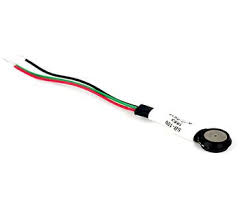
Barometric Pressure Sensor SB-100
The SB-100 is a compact barometric pressure sensor that combines professional performance in a small form factor. It can suit systems that require an accurate sensor while keeping dimensions small and integration easy.
Possible applications include:
- Weather stations
- Data loggers
- Environmental systems
- Research stations
- Hydrological systems
- Portable equipment
- Projects where space is limited
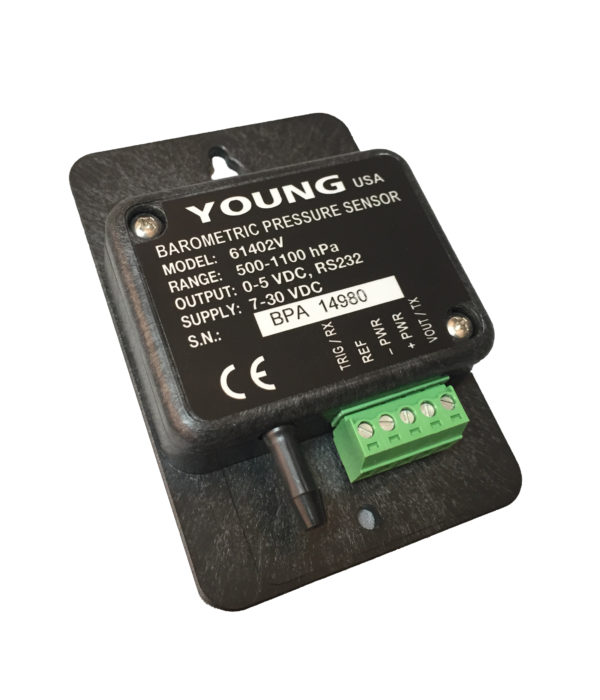
Barometric Pressure Sensors 61402V and 61402L
The 61402V and 61402L models are designed for barometric pressure measurement in meteorological and professional systems. They can be integrated into automatic stations and data acquisition systems that require high performance and an output signal suited to the system configuration.
When selecting a model, check the output type, supply voltage, measurement range and data logger requirements.
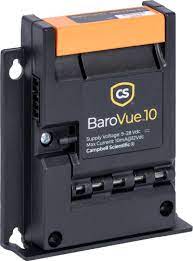
Digital Barometer BaroVue 10
The BaroVue 10 is an accurate digital barometer suitable for meteorological and hydrological measurements. Its wide measurement range allows it to be used in stations and systems operating at various altitudes and in various conditions.
The barometer is suitable for applications that require:
- Digital output
- Measurement stability
- Integration with a data logger
- Continuous monitoring
- Operation at remote stations
- Meteorological measurements
- Barometric compensation in hydrology
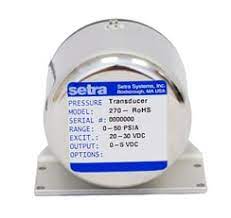
Barometric Pressure Sensor MODEL 270
The MODEL 270 is a professional analog sensor for barometric, absolute and gauge pressure measurements. It is suitable for applications that require high accuracy over a wide temperature range.
Its design and customization options allow it to be integrated into environmental, meteorological, industrial and research projects.
Before ordering, precisely define the pressure type, measurement range, output signal, connections and installation conditions.
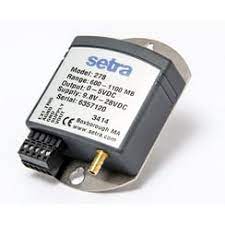
Barometric Pressure Sensor Model 278
The Model 278 is designed for barometric pressure measurement in systems that require professional installation and reliable data acquisition.
It can be suitable for:
- Weather stations
- Research systems
- Control rooms
- Laboratories
- Environmental systems
- Industrial applications
- Permanent monitoring systems